Looking for religion story ideas? (April 2026)



A Rare Ecumenical Chorus Calling for Peace and Compassion
EDITOR’s NOTE: Sponsored by the Communications Committee of the International Association of Religion Journalists (IARJ), these columns are designed as brainstorming opportunities.
This April “Story Ideas” column focuses on an important development among powerful Christian groups, based in the U.S. but speaking to the whole world about global issues concerning core religious values of peace and compassion. Wherever you are reporting on religion around the world, this “Story Ideas” column recommends that you look for unusual cooperative efforts by either “ecumenical” or “interfaith” coalitions concerned about war and the treatment of millions of migrants around the world.
I have covered religious life across the U.S. and around the world for half a century and I’ve rarely seen such an ecumenical choir calling for leaders—specifically American leaders at the moment—to remember basic human values that Christianity has echoed for thousands of years.
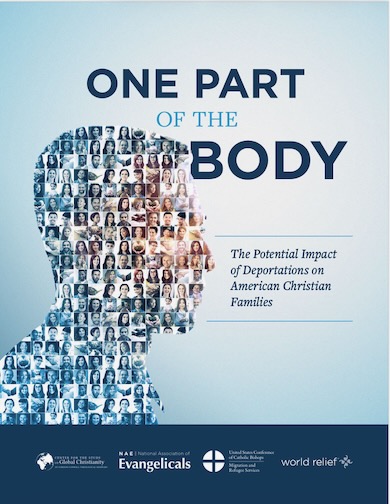
This urgency arose a year ago over the harsh treatment of undocumented migrants in the U.S.—and led to the historic, ecumenical statement One Part of the Body: The Potential Impact of Deportations on American Christian Families. It’s startling for anyone who knows America’s deeply divided religious history to see logos of both the National Association of Evangelicals’ (NAE) and the U.S. Conference of Catholic Bishops’ (USCCB) on the front page of the 20-page document.
This was a prophetic move by these cosigners and now serves as a widely distributed touchstone document. Just this week in the U.S., it was cited by the widely read Texas-based Christian pastor Zach Lambert in a moving column he headlined: A Pastor in ICE Detention on Good Friday—And they won’t even give him a Bible.
But Zach is hardly alone!
Then, just last week—
Both the NAE and USCCB have followed up on that partnership. Just last week, the groups began an ongoing series of working sessions to collaborate on responses to American immigration policy. Here’s the NAE version of that announcement. And here’s the USCCB version of that news story. The new project is called the Evangelical-Catholic Dialogue on Immigration (ECDI). The ECDI is being co-chaired by Bishop Brendan J. Cahill, chairman of the USCCB’s Committee on Migration, and Reverend Walter Kim, president of the NAE.
As they launched this project, Bishop Cahill said:
I view the ECDI as a means of growing in Christian unity with our evangelical brothers and sisters, while also furthering our shared goal of bringing the message of the Gospel to bear on one of the most pressing issues of our time. Whatever theological differences exist between us, Catholics and evangelicals across our country are navigating many of the same complex realities—political and social—and the issue of immigration is an important example. Together, we place our hope in Jesus Christ, and we seek to live out his teaching in relation to this challenging topic.
Our Holy Father, Pope Leo XIV, has emphasized dialogue as the key to peace, understanding, and fraternity, especially between different faith traditions. In seeking to live that out through the ECDI, I am deeply grateful to my co-chair, Reverend Kim, for his leadership and willingness to collaborate in this way and for the commitment of all those participating.
At the NAE, President Kim said:
Evangelicals and Catholics share a deep commitment to honoring the dignity of every person made in God’s image. Across our congregations and communities, we are walking with families facing uncertainty, fear and complex legal realities. This dialogue gives us the opportunity to listen deeply, learn from one another, and strengthen our Christian witness by addressing immigration with biblical wisdom, love and moral clarity. Immigrants have enriched our churches and invigorated many evangelical institutions. We are called to share the gospel with them and to love them as we love ourselves. I am grateful to Bishop Cahill and other Catholic leaders for their commitment to this work, and I look forward to how this dialogue will help us serve immigrant communities and our national security with greater unity and purpose.
And, speaking from the most influential pulpit in the Christian world—
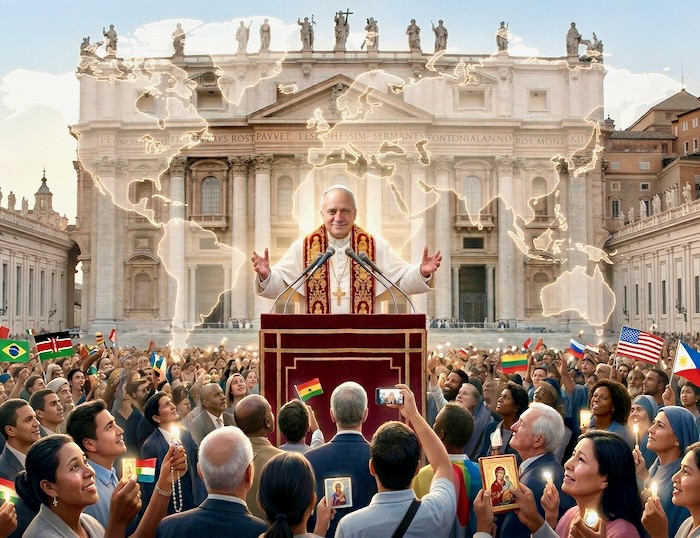
For his part, since his election on May 8, 2025, Pope Leo XIV has been speaking to the entire world about the Christian call for peace and compassion.
Leo lifts up these themes almost every time he speaks in public from homilies to other Vatican statements issued under his name. The urgency in his voice about these issues has risen especially since American officials, in recent weeks, have begun talking about waging war in harsh new ways, for example “giving no quarter” and deliberately bombing essential civilian infrastructure like water desalinization plants.
Organizations, including the International Committee of the Red Cross, are now warning that such approaches to war violate longstanding humanitarian values and “can amount to war crimes.” The New York Times and other major news services are reporting similar conclusions from global experts in human rights. (Here’s an example from The Times published on March 30. Or, here’s a CNN analysis from mid-March.)
Words intended to touch consciences around the world—
Pope Leo’s statements are publicly available from this Vatican interface that allows readers to choose from many different languages.
One of Leo’s April 2 homilies—during his first Holy Week presiding as pontiff—sparked widespread press coverage, especially when he said at St. Peter’s Basilica during Mass on April 2:
In this dark hour of history, it has pleased God to send us to spread the fragrance of Christ where the stench of death reigns. Let us renew our ‘yes’ to this mission that calls for unity and brings peace.
In fact, Leo dedicated this entire Holy Week 2026 to a worldwide call for peace as more than 2 billion Christians remember how Jesus was imprisoned, tortured and killed by the authorities of the Roman Empire. Leo concluded one of his Holy Week homilies:
As we set our gaze upon him who was crucified for us, we can see a crucified humanity. In his wounds, we see the hurts of so many women and men today. In his last cry to the Father, we hear the weeping of those who are crushed, who have no hope, who are sick and who are alone. Above all, we hear the painful groans of all those who are oppressed by violence and are victims of war.
Christ, King of Peace, cries out again from his cross: God is love! Have mercy! Lay down your weapons! Remember that you are brothers and sisters!
In the words of the Servant of God, Bishop Tonino Bello, I would like to entrust this cry to Mary Most Holy, who stands beneath the cross of her Son and weeps also at the feet of those who are crucified today:
“Holy Mary, woman of the third day, grant us the certainty that, in spite of all, death will no longer hold sway over us; that the injustices of peoples are numbered; that the flashes of war are fading into the twilight; that the sufferings of the poor are breathing their last. And grant, finally, that the tears of all the victims of violence and pain will soon be dried up like frost beneath the spring sun”
So, what is the “Story Idea” here? I doubt that American religious leaders are alone in forming new prophetic coalitions to speak out on these urgent global issues. To repeat from our opening above: Wherever you are reporting on religion around the world, this “Story Ideas” column recommends that you look for unusual cooperative efforts by either “ecumenical” or “interfaith” coalitions concerned about war and the treatment of millions of migrants around the world.
Share with us
Let’s make this as easy as possible: David Crumm, a veteran religion writer, magazine editor and publisher based in Michigan in the U.S., writes this column on behalf of the IARJ Communications Committee. If you’ve got further ideas to share about any item in this column, email David directly at [email protected]
Or, if you’ve reported these kinds of stories, send David a link that we can include in a future column.
The IARJ is dedicated to assisting religion journalists around the world to help each other find ever more meaningful ways to report on the significant impact of religion in communities around the world.