
Religion Story Ideas, May 2026 edition



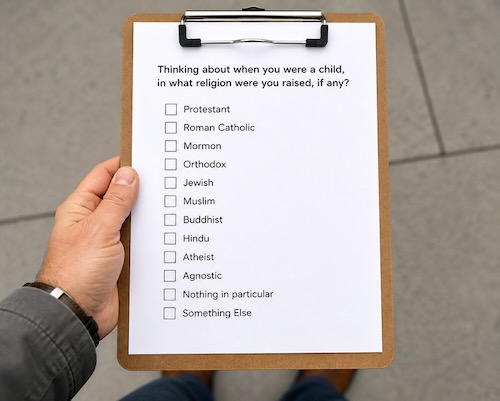
‘Religious switching’ is reshaping cultural identities in some countries
EDITOR’s NOTE: Sponsored by the Communications Committee of the International Association of Religion Journalists (IARJ), these columns are designed as brainstorming opportunities.
This May 2026 “Story Ideas” column focuses on a deeper dive into global religious trends by Pew Research, examining religious “switching” over a person’s lifetime. This is a great opportunity for journalists to move beyond reporting solely on gains and losses by religious groups to explore where people were in their religious lives before their most recent affiliation, or lack of any affiliation.
Why did they make such a major change in their lives?
Was it because of something their original religious group did, or did not do?
Or, was it because another religious group now appears to be more appealing, helpful or inspirational?
If switching trends continue, what might this changing demographic mean for the overall culture of a region or an entire nation?
But, first, it’s important to understand this term: “Religious Switching.” Pew provides this working definition to understand its more detailed reports:
“Religious switchers” include, as examples, a person who was raised Protestant and is now religiously unaffiliated; a person who was raised Catholic and now identifies as any kind of Protestant; a person who was raised in no religion but now identifies as Jewish; and a person who was raised as an Orthodox Christian and now identifies as a Catholic. However, a person who was raised as a United Methodist and now identifies as a Southern Baptist would not be considered to have switched religions, because both of those denominations are Protestant. Similarly, a person who was raised with no particular religion and now identifies as an atheist would not be counted as having switched, because both of those categories are part of the religiously unaffiliated grouping.”
If you want to explore this further in your own reporting, you’ll want to look at several very useful reports within Pew’s enormous website. I suggest you start with:
An April 23, 2026, column that summarized some of Pew’s findings sparked the interest of a lot of religion journalists around the world. This column carried the intriguing headline: Catholicism has lost people to religious switching in many countries, while Protestantism has gained in some
The key here is that this April 2026 report analyzes trends in 24 nations around the world—and some of these findings are fascinating!
Then, for further background, jump back to a February 2025 baseline report on “religious switching” among Americans, which was part of a larger Pew “Religious Landscape Study.” When visiting this page, you’ll find options in the right-hand column to explore the entire Landscape Study in a 393-page PDF. But you also should take a look at the survey text itself, where you’ll find the specific questions that led to these findings.
Share with us
Let’s make this as easy as possible: David Crumm, a veteran religion writer, magazine editor and publisher based in Michigan in the U.S., writes this column on behalf of the IARJ Communications Committee. If you’ve got further ideas to share about any item in this column, email David directly at [email protected]
Or, if you’ve reported these kinds of stories, send David a link that we can include in a future column.
The IARJ is dedicated to assisting religion journalists around the world to help each other find ever more meaningful ways to report on the significant impact of religion in communities around the world.