
What Ramadan Means for Non-Muslims in Nigeria



Every year, Ramadan sweeps across Nigeria like a soft reset button, adjusting the social temperature of a country that often runs hot. Though rooted in Islamic devotion, its impact spills far beyond the Muslim community. For non-Muslims, Ramadan is not a spectator event. It is a national atmosphere, a civic rhythm, a month where Nigerians briefly remember what it feels like to act like a collective.
In a country where identity politics can fracture even the simplest conversation, Ramadan becomes a rare moment of shared sensitivity. It reorders how we speak to one another, how we relate in public, and how we navigate our common spaces.
From Maiduguri to Jos to Lagos, the country slows down. Meetings start later. Roadside quarrels decline. Even those not observing the fast instinctively soften their conduct, aware that millions around them are running on less energy, more patience, and a deliberate moral discipline.
For non-Muslims, this becomes an annual reminder of what mutual respect looks like when practiced on a national scale. It raises a quiet yet unsettling question: if this level of restraint is possible for a month, what prevents us from carrying it into the rest of the year?
Ramadan brings an explosion of generosity. Iftar meals extend beyond the mosque. Street corners become feeding points. Neighborhoods organize food drives. Christians, traditionalists, and Muslims sit at the same evening tables without interrogation or hesitation.
In a society where inequality can feel suffocating, Ramadan temporarily levels the field. Hunger becomes a collective concern. Hospitality becomes a shared instinct. And non-Muslims experience firsthand how faith-driven compassion can strengthen civic bonds.
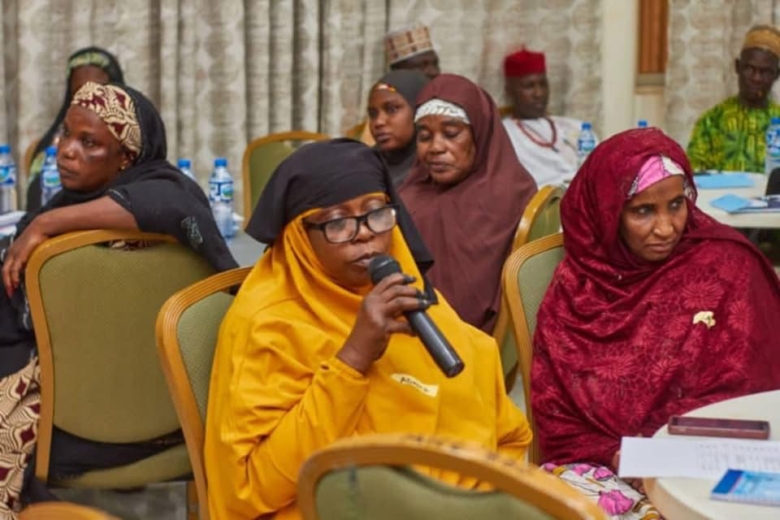
Nigeria often performs unity on paper but struggles to embody it in practice. Ramadan quietly accomplishes what many dialogues attempt. It creates natural interfaith bridges. Christian neighbors wake up Muslim families for sahur. Church groups donate food to fasting communities. Traditional rulers convene joint peace meals.
These gestures carry more than symbolism. They remind the country that coexistence is not an abstract concept but a daily decision. For non-Muslims, Ramadan becomes a window into the lived values of their Muslim brothers and sisters, beyond stereotypes and politics.
In a region where extremist groups manipulate religious identity, Ramadan becomes a powerful counter-narrative. It highlights the difference between Islam as a faith of compassion and Islam as misused by violent actors. Non-Muslims, watching how ordinary Muslims live the month, gain a more grounded understanding of the religion’s human core.
This is especially relevant for peace practitioners, journalists, policymakers, and civic leaders who shape public narratives. Ramadan offers evidence that most Nigerians are committed to peaceful coexistence and that extremism is an aberration, not a norm.
Nigeria is a country in perpetual motion. But Ramadan introduces intentional pauses: at dawn, at dusk, during taraweeh prayers, through acts of charity, through softer conversations. Even non-Muslims feel the slowed tempo. Businesses adjust. Communities recalibrate. Night markets come alive with a gentler energy.
In a restless nation, Ramadan reminds us that slowing down is not laziness but clarity. That silence can be a form of healing. That community thrives when we remember the humanity of those around us.
For non-Muslims, Ramadan is not an invitation to convert but an invitation to reflect. It is a lesson in shared humanity, in how values can shape public behavior, in how faith can be a unifying force rather than a dividing line.
Ramadan is one of Nigeria’s quiet gifts. A reminder that beneath our loud politics and competing identities, we are a people capable of empathy, restraint, and genuine community. And perhaps, if we choose, these lessons can outlive the crescent moon. And as we get towards the end of this year’s Ramadan, its quiet instructive that it’s also come at the same time as Lent, a period that Catholics are equally fasting.